You Keep Calling Yourself Lazy When You’re Actually Burned Out
Not everything that looks like procrastination is laziness.

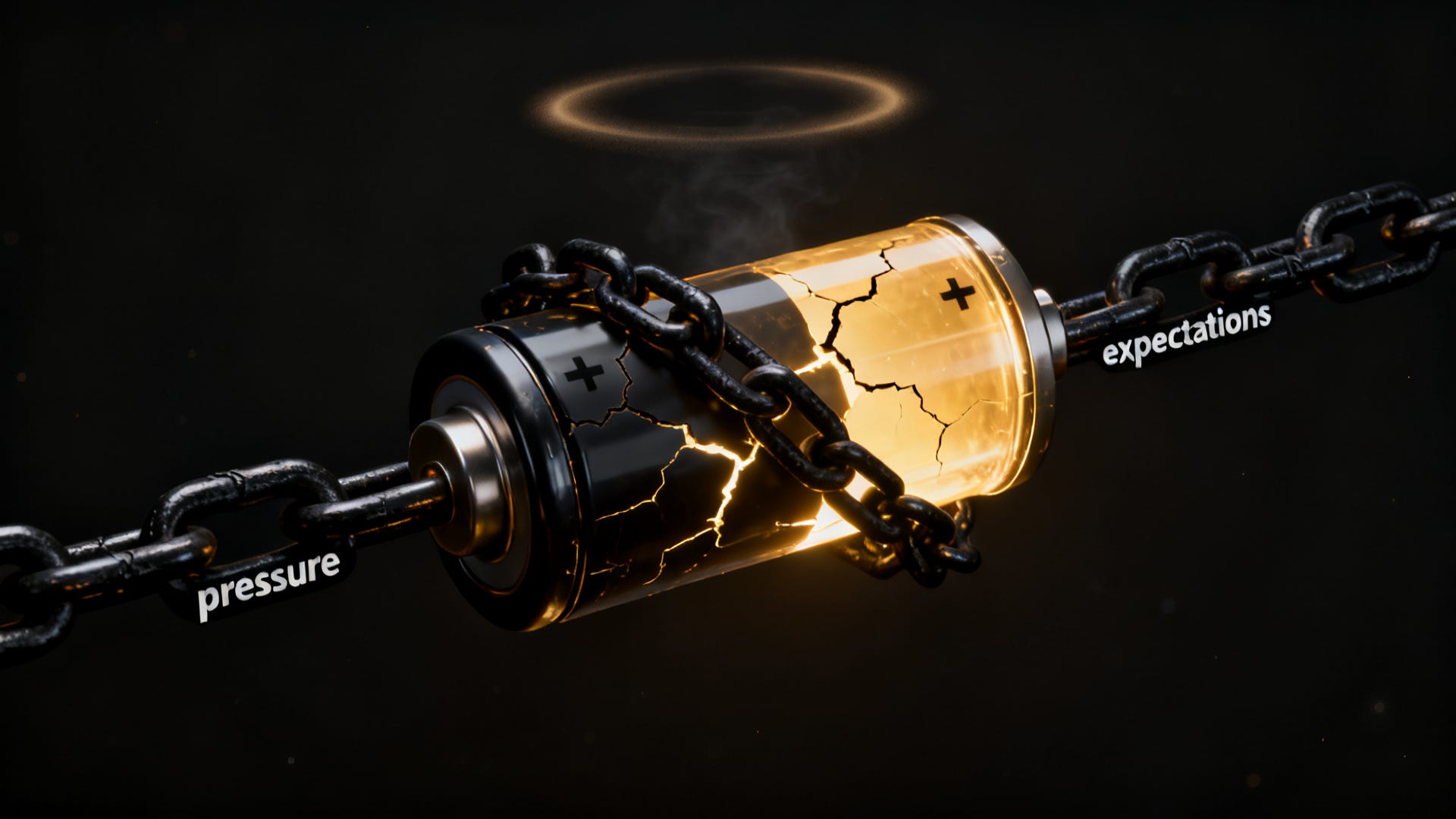
One of the quietest ways people damage themselves is by misunderstanding their own exhaustion.
It usually begins innocently enough. You wake up feeling tired for the third or fourth morning in a row. You notice yourself avoiding work that normally would not feel difficult. Tasks begin piling up. Small responsibilities start feeling strangely heavy. You promise yourself you will catch up tomorrow, but tomorrow arrives and somehow everything still feels just as difficult.
After enough of these days, a familiar thought begins to form.
Maybe I’m just lazy.
For many people, this thought does not arrive as a passing observation. It becomes an identity. Slowly, they begin interpreting every moment of low energy, every unfinished task, every delayed responsibility as evidence of a personal flaw. They convince themselves that what they need is more discipline. More motivation. More self-control. A stricter morning routine. Better habits. More pressure.
And this is where the real damage begins.
Because not everything that looks like laziness is laziness.
Sometimes what people call laziness is actually chronic mental exhaustion that has gone unrecognized for far too long.
The problem is that burnout and laziness often look nearly identical from the outside.
Both can involve procrastination. Both can involve avoidance. Both can involve low motivation, inconsistent behavior, difficulty focusing, and a growing sense that simple tasks feel much harder than they should.
But internally, they are very different experiences.
Laziness implies resistance to effort. It suggests that a person has the capacity to act but simply does not want to.
Burnout is something entirely different.
Burnout happens when the system itself begins shutting down after carrying more pressure than it was designed to sustain.
And unfortunately, modern life has created the perfect environment for this confusion.
Most people today are living in a state of low-grade exhaustion so constant that they no longer recognize it.
We live in an environment that quietly normalizes depletion.
We sleep less than previous generations while exposing ourselves to more stimulation than ever before. Work no longer ends when the workday ends. Our phones make us permanently reachable. Information follows us everywhere. Social media keeps our nervous systems locked in cycles of comparison, overstimulation, and subtle psychological stress that many people underestimate.
Even rest itself has become complicated.
People say they are resting while scrolling for two hours, consuming more content, exposing their attention to more noise, and wondering why they still feel mentally drained afterward.
The result is predictable.
People begin trying to build productive lives on top of exhausted minds.
And because productivity culture teaches people that discipline solves everything, they assume their struggle must be a character issue.
They wake up tired and blame themselves.
They cannot focus and blame themselves.
They skip habits and blame themselves.
They feel overwhelmed and somehow interpret overwhelm as personal weakness.
This is one of the strangest cultural ideas we have collectively accepted: the belief that every drop in performance must be solved by increasing effort.
If you cannot focus, work harder.
If you feel tired, push through it.
If your habits collapse, become more disciplined.
If your body asks for recovery, ignore it.
And if none of this works, assume something is wrong with you.
But human beings are not machines.
No system in nature operates under constant output without periods of recovery.
Muscles do not grow during exercise. They grow during recovery.
The brain does not strengthen through endless stimulation. It strengthens through rest and consolidation.
The nervous system cannot remain under pressure indefinitely without consequences.
Yet many people continue living as though rest is something that must be earned rather than something biologically necessary.
This mindset quietly transforms discipline into self-punishment.
The irony is that the harder exhausted people push themselves, the worse things often become.
Because burnout changes the way effort feels.
Tasks that once required little thought suddenly demand enormous energy. Decision-making becomes slower. Attention weakens. Emotional resilience drops. Small inconveniences feel disproportionately stressful.
Eventually, even basic habits begin falling apart.
And because people do not understand what is happening internally, they interpret these signs incorrectly.
They do not say, I think my system needs recovery.
They say, I need to stop being lazy.
So the cycle deepens.
More pressure creates more exhaustion.
More exhaustion creates worse performance.
Worse performance creates more self-criticism.
And self-criticism creates even more pressure.
Many people spend years trapped inside this loop without ever realizing that discipline was never the problem.
The uncomfortable truth is that a large percentage of people seeking better discipline are not actually lacking discipline at all.
They are depleted.
And no amount of motivational content can solve depletion.
This is why recovery deserves a completely different place in how we think about self-improvement.
Recovery is often misunderstood as the opposite of discipline.
People imagine discipline as hard work, productivity, consistency, and forward movement.
Recovery is treated as a reward that comes later.
But this framing is deeply flawed.
Recovery is not what happens after discipline.
Recovery is part of discipline.
A rested mind makes better decisions.
A regulated nervous system handles stress more effectively.
A body that has recovered has greater capacity for consistency.
Energy determines behavior far more than most people realize.
This is why sustainable self-improvement requires honesty.
Before asking how to become more disciplined, it may be worth asking a different question.
Am I actually struggling with discipline?
Or…
Am I simply exhausted in ways I have not allowed myself to acknowledge?
The answer can change everything.
Because sometimes what looks like procrastination is not laziness.
Sometimes what feels like failure is simply burnout.
Sometimes missing habits has nothing to do with weakness.
And sometimes the kindest thing a person can do for themselves is stop trying to solve exhaustion with more pressure.
The modern world has taught people to treat themselves like machines built for endless output.
But a better life cannot be built through constant self-rejection.
Discipline should not feel violent.
Growth should not require chronic self-criticism.
And becoming better should never demand that you destroy your relationship with yourself in the process.
Real discipline is quieter than people think.
Sometimes it looks like sleeping earlier.
Sometimes it looks like stepping away.
Sometimes it looks like protecting your attention instead of consuming more advice about how to improve.
And sometimes the strongest thing a person can do is stop calling themselves lazy long enough to recognize that what they truly need is recovery.
Not punishment.
Not guilt.
Not another impossible routine.
Just recovery.
Because sustainable growth was never meant to come from constantly fighting yourself.
It comes from learning how to support yourself well enough to keep going.
The goal is not to force yourself endlessly.
The goal is to build a life your mind and body can actually sustain.
Slowly.
Calmly.
Consistently.
Soft Discipline is about becoming better without becoming cruel to yourself first.
Thank you! I really needed this. And my friend, too!
I needed to hear this gentle reminder ❤️